
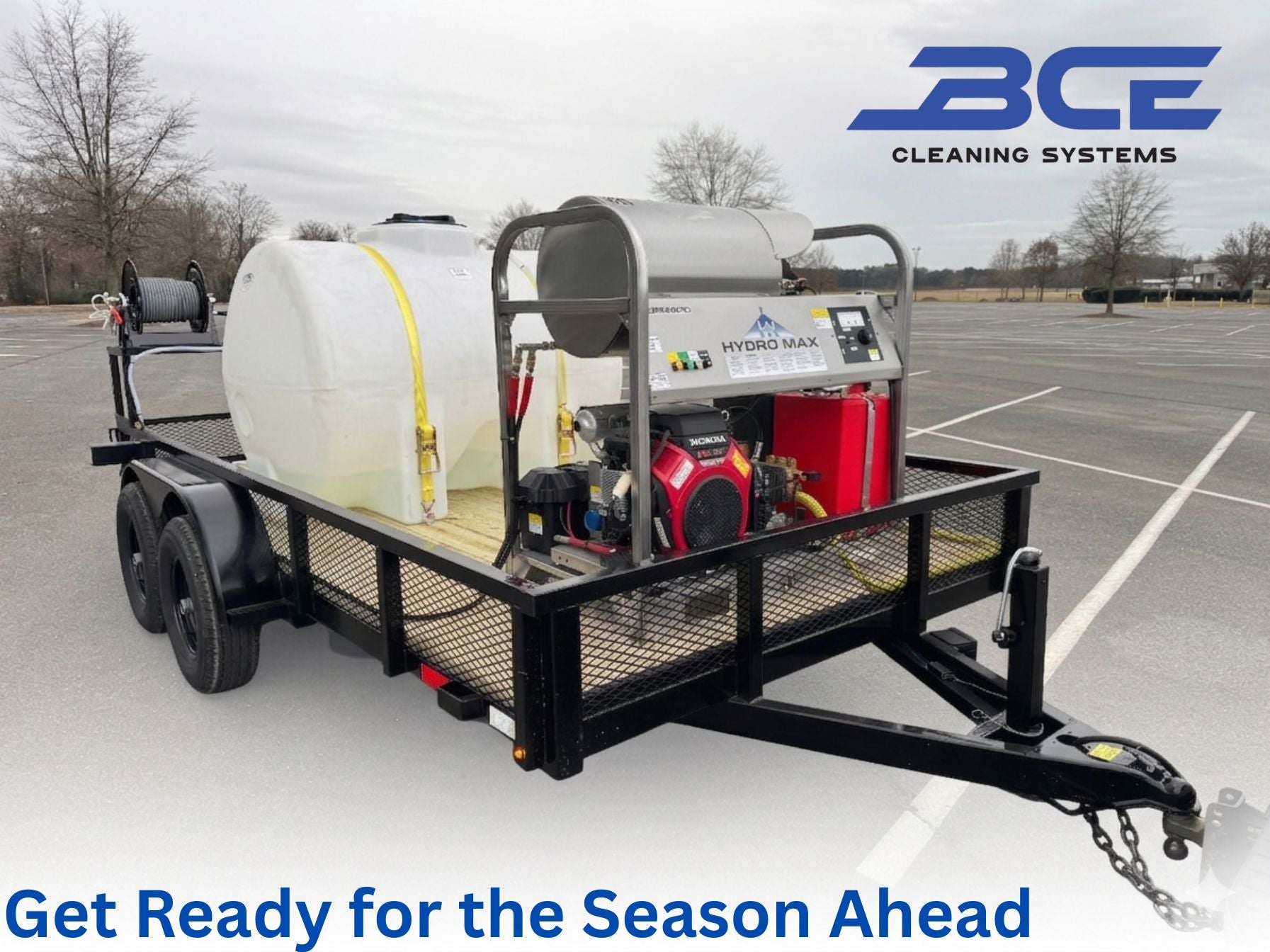
Spring is right around the corner. While some of you have been washing through the winter, many are just now getting ready to pull the pressure washer out of hibernation.
Don’t wait until the day before a big job to find out you have a problem. Give yourself time to troubleshoot and source parts.
What to Look For:
Before you even turn the key, do a visual "walk-around" to look for damage or unexpected "guests" (we’ve found everything from bees nest in blower wheels to tadpoles in buffer tanks).
- Plumbing & Fittings: Check for cracked or broken fittings on the machine and the plumbing lines.
- The Tank & Filters: Look for algae or debris in your buffer tank and water filters. If it’s green, clean it out before it hits your pump.
- Hoses & Accessories: Inspect your high-pressure hoses, reels, wands, and trigger guns for wear or leaks.
- Battery Health: Don’t just check the voltage; get it load tested. A bad cell can show "charged" but fail under pressure. Running the burner on a hot water machine with a dead or faulty battery can cause burner issues.
- Fuel & Injection Systems: If you drained your tanks or added a stabilizer before storage, you should be in good shape. However, fuel degrades faster than most people realize.
- The "Sniff Test": Check your gas and diesel tanks. If the fuel has a sharp, varnish-like smell, it has gone bad and must be drained.
- Carbureted Engines: Degraded gas gums up the tiny internal passages of a carburetor. You won’t truly know if it’s "gummed up" until you try to start the machine and it struggles to stay running.
- EFI Engines: If you have a fuel-injected gas, fuel quality is even more critical. Old fuel can clog fuel injectors, leading to poor atomization and "hunting" (surging) engines.
- Diesel Engines and Burners: Diesel fuel can also go bad; while it takes a little longer than gas, the quality is even more critical. If you have a diesel engine or a diesel burner, old fuel can clog fuel injectors and burner nozzles leading to poor atomization, "hunting" (surging) engines, or a burner that smokes and fails to ignite.
Pro Tip
It is much cheaper to drain and replace five gallons of fuel today than it is to pull an EFI system or a burner assembly for a professional cleaning mid-season.
The Test Run
Even if you are 3–6 weeks away from your first job, run the machine for 10–20 minutes today.
If it’s still freezing at night in your area, remember to re-winterize it after your test!