
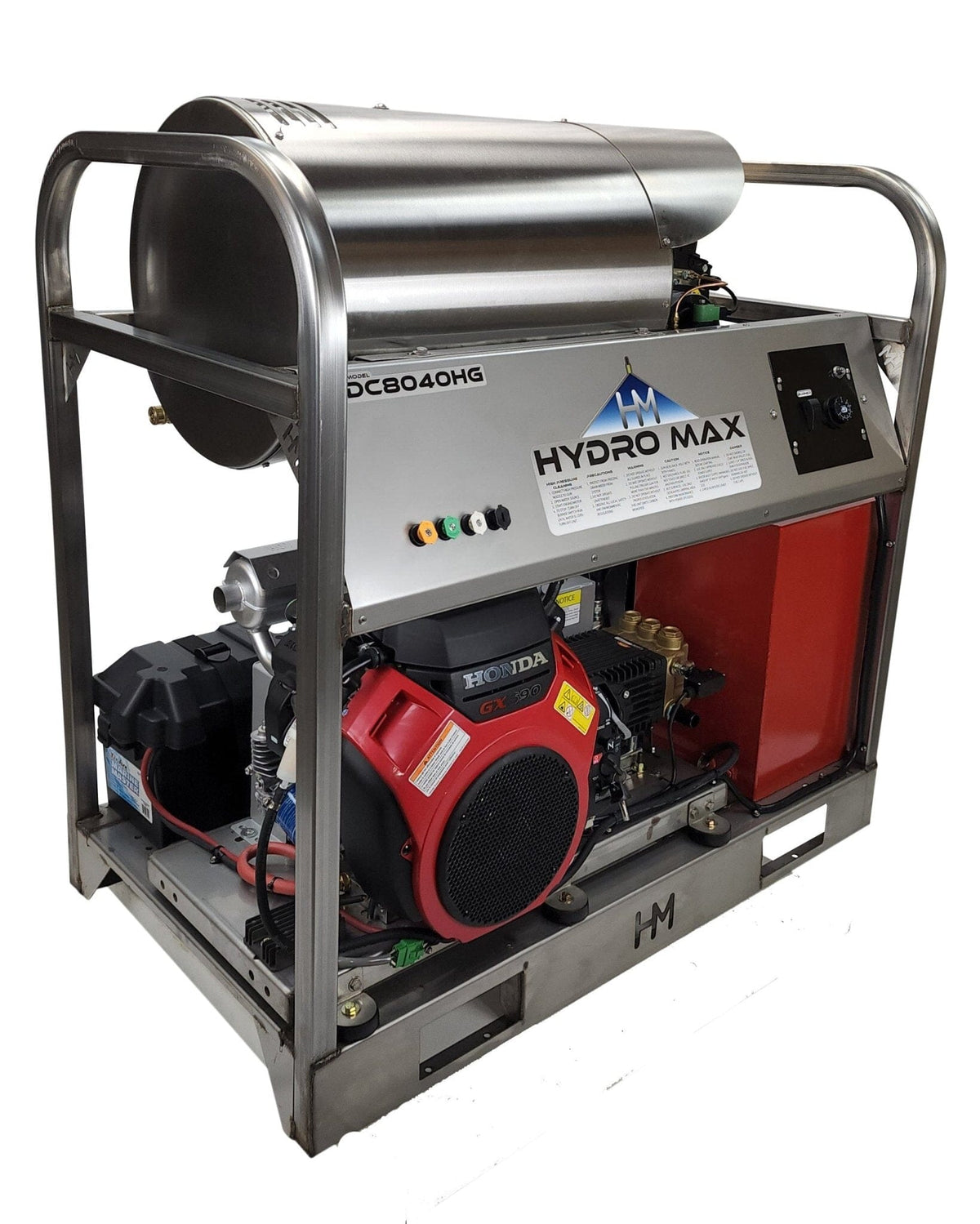
Every year when the weather starts to turn cold, our phone rings with the same question. Do I need a hot water pressure washer, or is cold water enough?
I have been building pressure washers here in Calhoun, Georgia since 1998, and my honest answer is: it depends what you clean.
If you clean grease, oil, diesel soot, food residue or animal fats, or you work through the cold months, hot water will usually clean faster and with less chemical. If your work is mostly dirt, mud and mildew, house washing and flatwork in mild weather, a cold water unit is simpler, lighter and cheaper to own. A lot of our customers run both. Some add heat to the cold water rig they already have.
Let me explain how I look at it.
Why a Hot Water Pressure Washer Cleans Differently
Pressure and flow move the dirt. Heat changes the dirt itself.
Oil and grease get soft and let go when the water is hot. Same as washing a greasy skillet in your kitchen. Hot water takes it off, cold water just moves it around.
With cold water you can still get there, but you pay for it with more detergent, more dwell time and more passes.
Hot water also helps most detergents work faster, so you often use less chemical on the job. Surfaces dry faster, which matters when a truck or a machine has to go back to work. And when the air and the supply water get cold in late fall and winter, heat keeps your cleaning from slowing down.
When a Hot Water Pressure Washer Is the Right Call
Fleet, trucking and heavy equipment
Road film, diesel soot, hydraulic fluid, greasy undercarriages. This is exactly what heat is for.
One of our customers told us how he does it. He washes 6 large trucks and trailers in about an hour, one operator, with an 8 GPM, 4,000 PSI hot water unit like our Hydro Max DC8540HAi. He lines the trucks up and sprays degreaser down the line. By the time he gets to the end, he goes back with detergent and rinses with hot water.
With cold water, he said he would likely need another round of degreaser and more scrubbing. Especially on the lower parts of the trucks, where the road grease and grime builds up.

Hydro Max DC8540HAi – 8 GPM @ 4,000 PSI hot water pressure washer
Restaurants, dumpster pads and drive-thrus
Cooking grease and food waste just smear around with cold water. Hot water lifts them so you can rinse them and recover them.
Agriculture and industrial
Livestock barns, processing equipment, tractors and shop floors all carry fats, oils and caked-on organic material. Here heat makes a real difference.
Cold-weather work
When it gets cold, cold water cleaning slows down and the chemicals work slower too. A heated pressure washer keeps you working into the off-season. If your business is seasonal, that matters.
When a Cold Water Pressure Washer Is Enough
House washing, soft washing and roofs
Most residential work is done with low pressure and the right chemistry. The cleaning comes from the solution, not from the heat.
Concrete, decks and general flatwork
Dirt, mud and mildew come off fine with cold water, if you have good flow and the right surface cleaner and nozzle.
Budget, weight and simplicity
A cold water unit has no burner, no fuel system for heat and no coil to take care of. It is lighter, easier to mount, and usually costs less up front. If that sounds like your work, take a look at our cold water pressure washers, such as the portable Hydro Max CW4040HG.

Hydro Max Portable CW4040HG – 4 GPM @ 4,000 PSI cold water pressure washer
Hot vs. Cold at a Glance
| Factor | Hot water | Cold water |
|---|---|---|
| Grease, oil, fats | Strong | Needs more chemical and time |
| Dirt, mud, mildew | Strong | Strong |
| Cold-weather work | Better suited | Slower, less effective |
| Upfront cost | Higher | Lower |
| Maintenance | Engine + pump + burner/coil | Engine + pump |
| Weight/footprint | Larger | Smaller |
What to Look for in a Commercial Hot Water Pressure Washer
Flow (GPM) and pressure (PSI)
Flow does most of the rinsing work. Pressure helps break the bond. Match both to the jobs you do most and to your water supply.
Our hot water pressure washers include belt-drive models from about 4 to 8 GPM with Honda or Kohler engines. Compare the ratings on each product page.
Burner fuel and power
Look at what fuel the burner uses and how it is powered, 12-volt or 120-volt. Think about how that fits your truck, your trailer or your shop.
Mounting: skid, trailer or stationary
Mobile contractors usually mount the hot water unit on a skid or a trailer with a water tank. If you rather start with a complete rig, see our pressure washer trailer packages, like the Hydro Max 8 GPM @ 4,000 PSI hot water trailer package.

Hydro Max 8 GPM @ 4,000 PSI hot water trailer package (Honda iGX fuel injected)
Chemical delivery
A properly sized chemical injector lets you put detergent through the machine. And the hot water helps that detergent do its job.

High Draw Adjustable chemical injector
Already Own a Cold Water Unit? Add Heat
You don't always need to replace a good machine.
Our Hydro Max Hot Box heater module is a stand-alone burner unit made to pair with a cold water pressure washer. It comes in 12-volt and 120-volt burner versions, for example the Hydro Max HB560-12 (12 Volt Burner).

Hydro Max HB560-12 Hot Box heater (12 Volt Burner)
Not every machine is a match, so before you buy, call us and we'll tell you if it fits your machine.
One important thing. Standard pump seals are not built for hot water going into the pump inlet. The heater goes after the pump, not before.
Cold-Weather Care for Hot Water Units
Heat helps you work in winter, but water left in the pump, coil or hose can still freeze between jobs.
Never fire the burner on a frozen system. Thaw it first. Store indoors when you can, and follow the manufacturer's winterizing procedure. We covered the basics in an earlier post: Pressure Washing Equipment – Winterizing Tips.
Making the Investment Work
A commercial hot water unit is a bigger purchase than a cold water machine, I know that. If spreading out the cost helps, check our financing options.
The off-season is also a good time to set up your rig, before the spring work comes back.
Not sure which setup fits your jobs? Contact our team. Tell us what you clean, where your water comes from and how you haul, and we'll help you narrow it down.
FAQ
Is a hot water pressure washer worth it?
For grease, oil and other petroleum- or fat-based soils, or for work in cold weather, usually yes. Heat speeds up cleaning and can reduce chemical use. For mostly house washing and flatwork in mild weather, a cold water unit is often enough.
Can I run hot water through a cold water pressure washer?
Not into the pump inlet, unless the pump is rated for it. Heat can damage standard seals. The usual way is to add a heater module after the pump, like our Hydro Max Hot Box.
What temperature does a hot water pressure washer reach?
It depends on the model, the burner and the flow rate. If you have a specific machine in mind, call us and we'll go over it with you.
Do hot water pressure washers need more maintenance?
Yes, a little more. You have a burner and heating coil to take care of on top of the engine and pump, including fuel filters, nozzles and periodic coil care. Follow the manufacturer's maintenance schedule and it will keep running reliably.